Pet well-being during your absence: what really matters
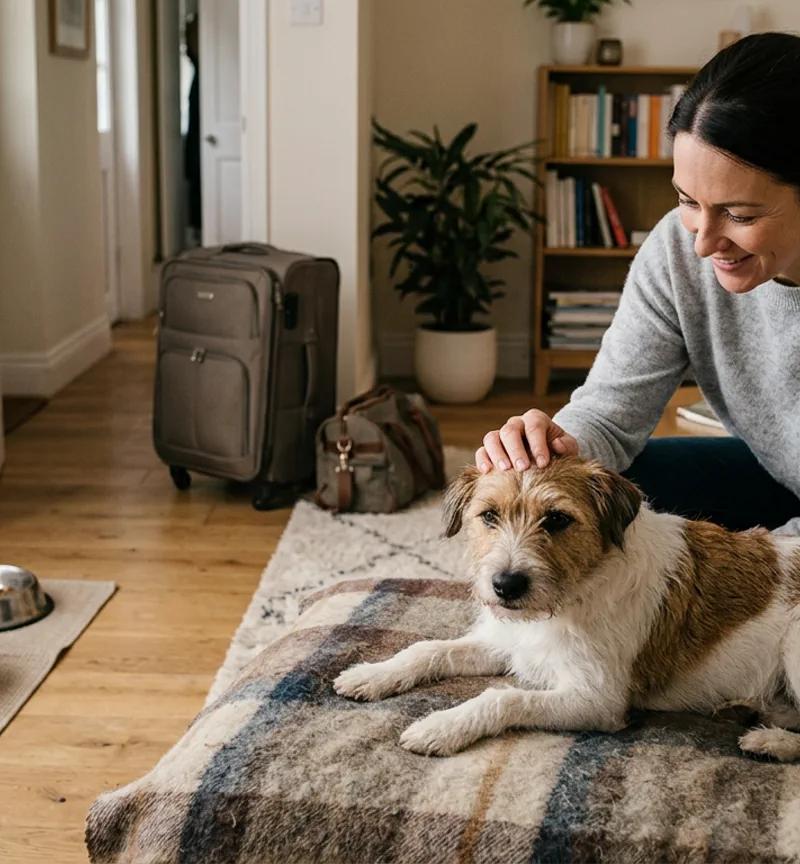
Pets don't understand suitcases. They understand routine, smells, and familiar faces. When you leave, what they lose isn't you, it's the stability of their daily environment.
This guide explains how to minimize the impact of your absence on your pet, regardless of the chosen care solution.
What pets really experience during an absence
Dogs
Dogs are pack animals. Your absence creates a void in their social hierarchy. Reactions vary among individuals: some adapt within 24 hours, while others develop persistent separation anxiety.
Anxiety signals to be aware of: destructiveness (chewing, scratching), excessive vocalization, refusing to eat on the first day, repetitive behaviors (pacing, compulsive licking).
Cats
Cats are less dependent on human presence but very attached to their territory. A change of environment (boarding facility, care at a third party's home) often disturbs them more than a change of person in their own home.
Most cats cope well with the owner's absence if someone visits regularly, their space is undisturbed, and feeding routines are respected.
The factors that truly make a difference
The environment
A pet in its usual environment adapts much more easily than a displaced pet. This is the main reason why house-sitting generates less stress than boarding for most pets.
The routine
Same mealtime. Same walking route. Same bedtime. Routine is the language of security for animals. The more the guardian maintains the owner's routine, the less stressed the pet will be.
Continuity of objects
Familiar bed, favorite toys, a blanket with your scent. These objects provide stable sensory information to your pet. Do not take them with you. Leave them.
The quality of the guardian's presence
A present and attentive guardian is better than an absent and stressed one. The quality of the interaction matters more than the quantity.
Vous êtes propriétaire d'animaux ou vous aimez les animaux ?
Preparing your pet before you leave
Do not change the routine in the days leading up to your departure. Pets detect changes in human behavior (suitcases, agitation, unusual goodbyes) and anticipate your absence by developing pre-anxiety. Leave as you normally would.
Arrange a meeting between the guardian and your pet before the care period. Your pet should have accepted the guardian in your presence. A dog that has met the guardian twice with its owner will accept them much better on the day of your departure.
Leave precise instructions. What the guardian needs to know: normal behaviors, warning signs, veterinarian, medications. The more precise the instructions, the less improvisation is needed. The less improvisation, the more stable your pet will be.
Your return: what to expect
Pets react to your return in very different ways. Some are euphoric. Others sulk. Some experience stress-related diarrhea on the day of your return.
All of this is normal and temporary. Do not overinterpret. Do not compensate with treats or changes in routine. Resume normal life immediately.
Prêt à rejoindre la communauté ?
Créez votre profil sans frais et rejoignez les gardiens de votre quartier.
Articles liés
Checklist : tout préparer avant de partir en vacances
Tout ce qu'il faut préparer avant de partir en vacances en laissant ses animaux. Checklist complète propriétaire.
LireChoisir son gardien : les critères qui comptent vraiment
Comment choisir le bon gardien sur Guardiens : profil, avis, écussons, rencontre. Les critères qui comptent vraiment et ceux qui ne servent à rien.
LireSécurité et confiance en house-sitting : comment ça marche sur Guardiens
Comment Guardiens garantit la confiance : vérification d'identité, avis croisés, écussons.
LireHouse sitting : guide complet (définition, prix, France 2026)
House sitting : tout comprendre. Définition, fonctionnement, prix, différences avec home sitting, pet sitting et pension. Le guide de référence en France.
Lire